ƏSƏRWORK
Adsız (Karusel / Daşınan Dəzgah)Untitled (The Carousel / Portable Loom - textile component)
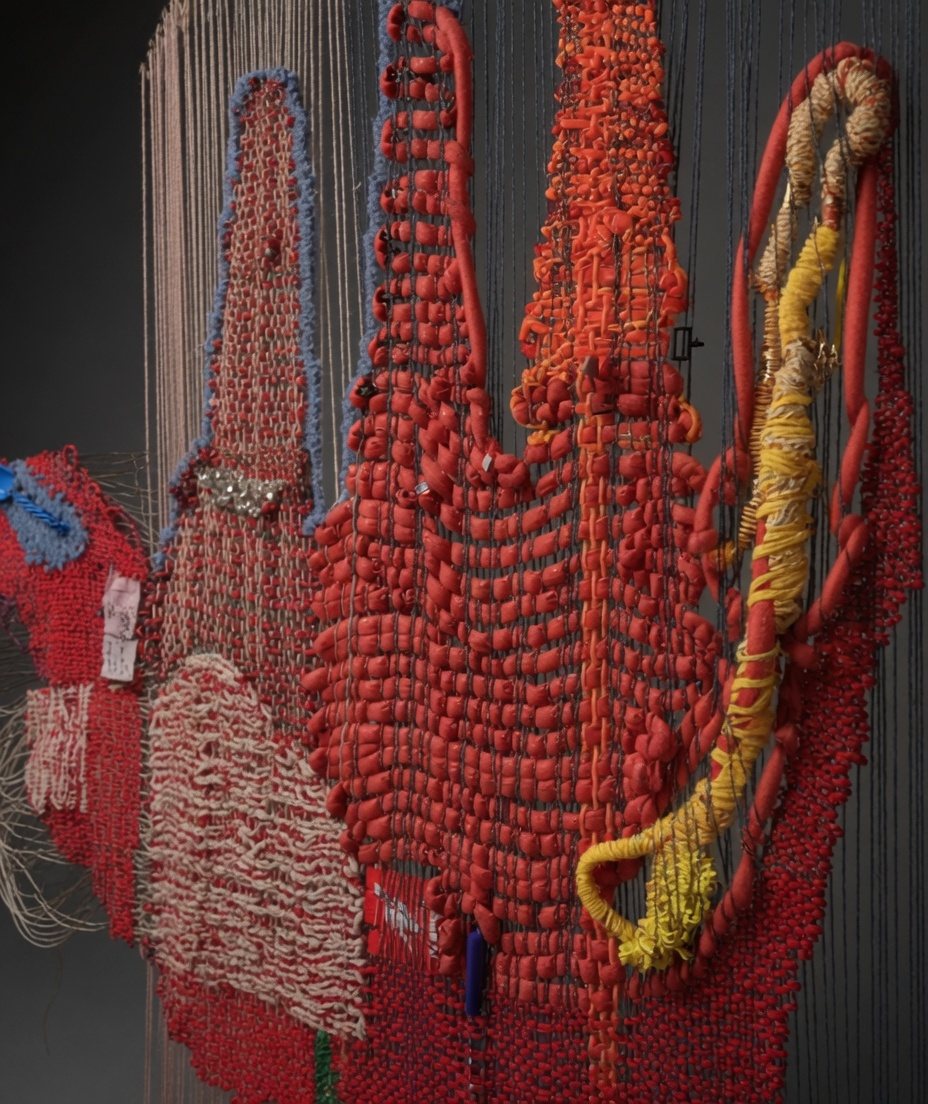
photo: Vesa Aaltonen
Azərbaycan
Adsız (Karusel / Daşınan Dəzgah) Henna Ahonun ABŞ-da yerləşən Headlands Center for the Arts rezidenturası dövründə formalaşmış layihəsidir. Rəssam həmin müddətdə böyük ölçülü daşınan toxuculuq dəzgahı ilə işləyib. Bakıda təqdim olunan versiyada isə instalyasiyanın tekstil hissəsi ön plana çıxarılır və əsərin toxunmuş səthləri, təsvirləri və material məntiqi Azərbaycan Milli Xalça Muzeyi ilə dialoqa daxil olur.
Əsərin başlanğıc nöqtəsi böyük bir əl təsviridir. Aho üçün əl həm bədənin bir hissəsi, həm də iş alətidir -toxunmağın, toxumağın, rəsm çəkməyin, yaratmağın və ətraf mühitlə qarşılıqlı təsirdə olmağın simvolu. Eyni zamanda əl rezidentura məkanının landşaftını xatırladan metaforik bir forma kimi də oxuna bilər.
Toxuma, qatlama və materialın yığılması prosesi vasitəsilə əsər yaşanmış təcrübəni görünən formaya çevirir. Tekstil səthi təmasın, təkrarın və fiziki iştirakın izlərini saxlayır və göstərir ki, bilik yalnız düşüncə vasitəsilə deyil, jest, toxunuş və materialla uzunmüddətli münasibət nəticəsində də yaranır.
Orijinal instalyasiyanın arxa tərəfində Aho Finlandiyanın dövlət gerbindəki şiri xam əl toxuması vasitəsilə yenidən təsəvvür edir. Burada şir sabit milli simvol olmaqdan çıxaraq maddi, dəyişkən və bədənlə əlaqəli bir formaya çevrilir. Əl və şir təsvirləri birlikdə əmək, kimlik, bədən və miras qalmış simvolik strukturlar arasında dialoq yaradır.
Toxunmuş xatirələr sərgisi daxilində əsər çəki, struktur və transformasiya mövzusunu ön plana çıxarır. Tekstil burada təsvirləri, tarixləri, yükləri və mümkün gələcəkləri daşıyan hərəkətli memarlıq forması kimi çıxış edir. Azərbaycan xalça ənənələrində olduğu kimi, burada da toxunmuş səth ritm, naxış və simvolik sıxlıq vasitəsilə oxunur. Aho göstərir ki, müasir tekstil praktikası ötürülmənin qədim məntiqini davam etdirə və eyni zamanda onu yeni məkan və bədən formalarına çevirə bilər.
English
Untitled (The Carousel / Portable Loom) was developed during Henna Aho’s residency at Headlands Center for the Arts, where she worked with a large portable loom. The Baku presentation focuses on the textile component of the installation, allowing the woven surfaces, images and material logic of the work to enter into dialogue with the Azerbaijan National Carpet Museum.
The work began with the image of a large hand. For Aho, the hand is both a bodily image and a working instrument: a symbol of touch, weaving, painting, making and being affected by one’s surroundings. At the same time, the hand may be read as a landscape shaped by the environment of the residency area.
Through weaving, layering and material accumulation, the work transforms lived experience into visible form. The textile surface records processes of contact, repetition and physical engagement, suggesting that knowledge is produced not only through thought, but also through gesture, touch and sustained interaction with material.
On the reverse side of the original installation, Aho reinterprets the lion from the Finnish coat of arms through raw, handwoven textile. Rather than functioning as a fixed national symbol, the lion becomes unstable, material and newly embodied. Together, the images of the hand and the lion create a dialogue between body, labour, identity and inherited symbolic structures.
Within Threads of Remembrance, the work introduces a register of weight, structure and transformation. Textile operates here as a form of mobile architecture carrying images, histories, burdens and possible futures. In resonance with Azerbaijani carpet traditions, where woven surfaces are read through pattern, rhythm and symbolic density, Aho’s work demonstrates how contemporary textile practice can continue older logics of transmission while transforming them into new spatial and bodily forms.