photo: Vesa Aaltonen
Azərbaycan
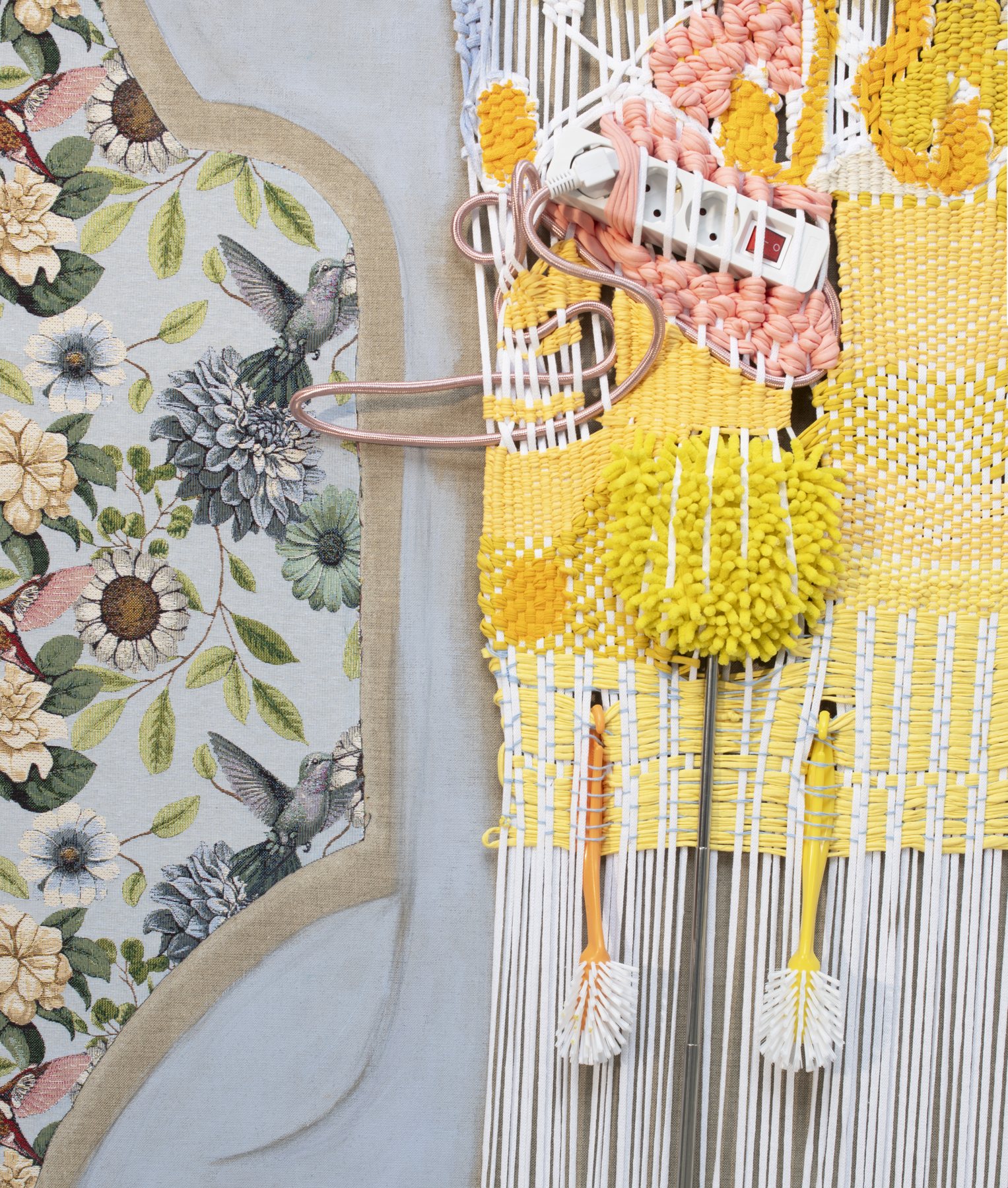
ADDIM 1: Açın və nəmləndirin Henna Ahonun ADDIM silsiləsinə daxildir. Bu silsilə gündəlik məişət və bədənlə bağlı hərəkətləri iriölçülü tekstil-rəsm strukturlarına çevirir.
ADDIM əsərlərinin adları hər kompozisiyada təsvir olunan obyektlərlə bağlı fel cütlüklərindən yaranır. Burada inhalyatorlar, burun spreyləri, şampun qabları, bədən kremi və dezodorant kimi gündəlik əşyalar sadəcə funksional detallar deyil. Onlar istehsal, istehlak, qayğı və mədəni məna tarixlərini daşıyır.
Bu əsərdə “açın” kətanın sağ tərəfində təsvir olunan burun spreyi ilə bağlıdır və bədənin nəfəsə açılmasını xatırladır. “Nəmləndirin” isə toxunmuş hissənin yuxarısında yerləşən mavi bədən kremi qabına istinad edir və dəri, toxunuş və gündəlik qayğı ilə əlaqələnir.
Əl toxuması tekstil, akril boya, sənaye parçası və hazır obyektlərin birləşməsi vasitəsilə Aho rəsmi qat-qat qurulmuş heykəltəraşlıq səthinə çevirir. Əsərdə yumşaqlıq və sıxlıq, ornament və alət, ritual və əmək eyni səthdə birləşir.
Toxunmuş xatirələr kontekstində əsər yaddaş və biliyin yalnız dil və düşüncə vasitəsilə deyil, materialla fiziki təmas nəticəsində də formalaşdığını göstərir. Tekstil burada gündəlik hərəkətlərin saxlandığı, təkrarlandığı və ötürüldüyü yavaş diqqət texnologiyasına çevrilir.
English
STEP 1: Open and Moisten belongs to Henna Aho’s STEP series, a group of large-scale textile-painting works that translate everyday domestic and bodily gestures into material procedures.
The titles of the STEP works derive from pairs of verbs connected to objects represented within each composition. These objects, from inhalers and nasal sprays to shampoo bottles, skin cream and deodorant, are not incidental details. Beyond their practical function, they carry histories of production, consumption, care and cultural meaning. Together they form what Aho describes as a psycho-material matrix: an environment of objects that shapes, supports and sustains the body in everyday life.
In this work, “open” refers to a nasal spray painted on the right side of the canvas, associated with opening the body to breath. “Moisten” refers to a blue bottle of body cream positioned above the woven section, connected to skin, touch and everyday care.
Through the combination of handwoven textile, acrylic paint, industrial fabric and ready-made objects, Aho expands painting into a layered sculptural surface. The work holds together softness and density, ornament and tool, ritual and labour.
Within Threads of Remembrance, the work suggests that memory and understanding are formed not only through language or thought, but through physical engagement with materials. Textile becomes a slow technology of attention through which everyday acts are stored, repeated and transmitted.