ƏSƏRWORK
Bu dildə danışanların hamısı – 30All the ones whom speak the language -30
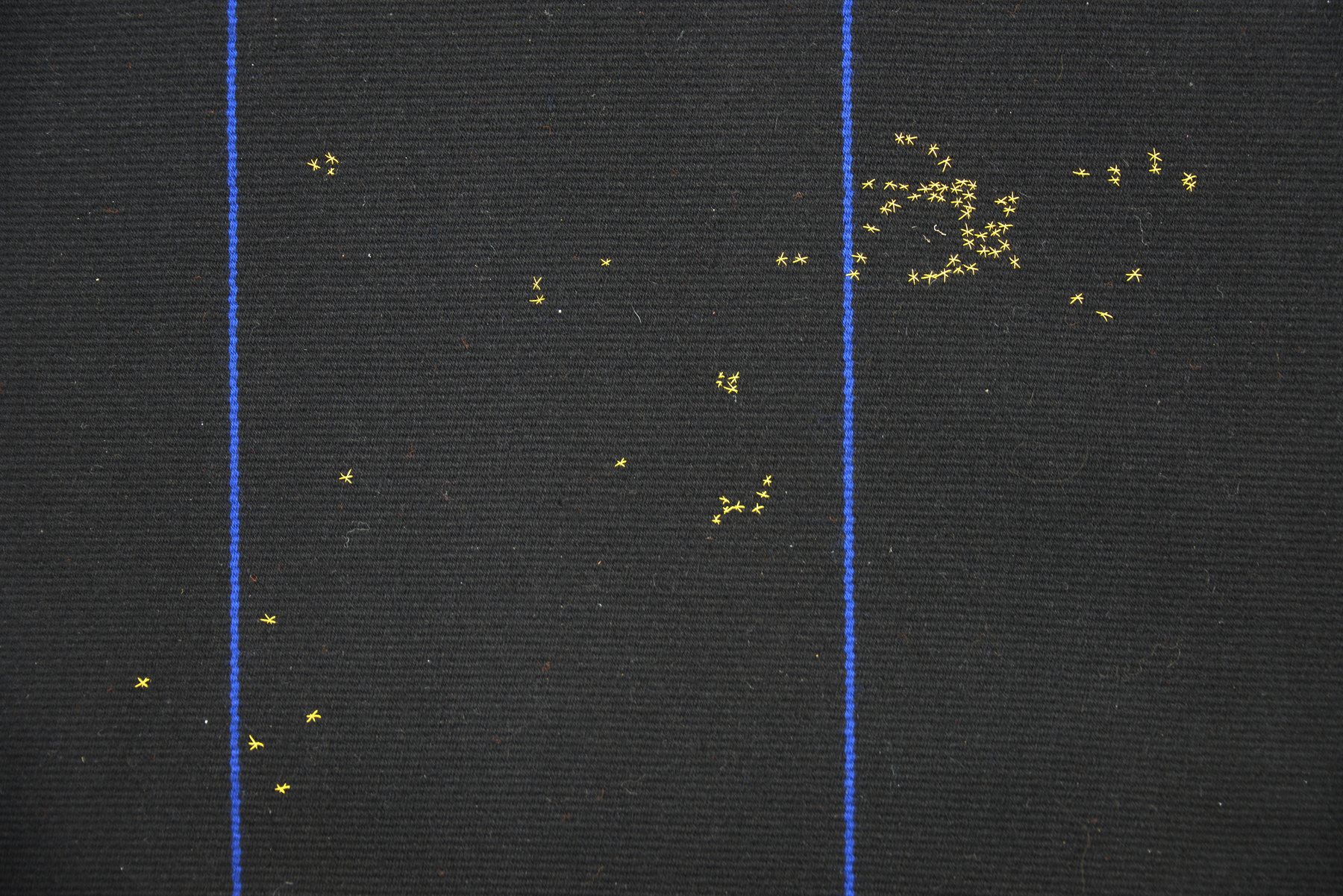
Azərbaycan
Epistemologiya Klasterində Elina Juopperinin əsəri Azərbaycan xalçasının müasir dövrdə ən dəqiq ekvivalentlərindən biri kimi çıxış edir – biliklərin bədənlə yaşanan və ötürülən ən kövrək formalarının daşıyıcısı olaraq.
İncə mavi uzunluq xətləri və qızılı naxışlı ulduzlarla işlənmiş ənənəvi qara raanu dekorativ xəritə deyil, yaşayan insanların həqiqi bürcüdür. Hər bir ulduz Finlandiyada yox olmaq təhlükəsi altında olan bir dili danışan son daşıyıcılardan birinin yaşayış ünvanını göstərir. Rəssam tərəfindən hesablanmış 246 nəfərin və daha sonra sahə araşdırmaları nəticəsində müəyyən edilmiş əlavə 30 nəfərin mövcudluğu bu tekstildə görünən formaya çevrilir.
Əsrlər boyu insanı soyuqdan qoruyan ənənəvi tekstil burada yaddaşın protokoluna çevrilir. Parça abstrakt statistikanı deyil, real insanların, evlərin və münasibətlərin koordinatlarını qoruyur.
Azərbaycan Milli Xalça Muzeyinin Şirvan və Qarabağ xalça ənənələri ilə dialoqda əsər xüsusi məna qazanır. Həmin xalçalarda ornament eyni zamanda nəsil yaddaşını, qorunmanı və kosmoloji təsəvvürləri daşıdığı kimi, Juopperinin işi də tekstilin bilik ötürməyin ən qədim və ən dəqiq sistemlərindən biri olaraq qalmağa davam etdiyini göstərir.
Dil hər iki həftədən bir yox olur. Lakin tekstil hələ də öz işığını qoruyub saxlayır.
English
All the Ones Who Speak the Language – 30 emerges from Elina Juopperi’s long-term engagement with endangered languages, cultural continuity and the fragile conditions through which knowledge survives across generations.
The work takes as its starting point a minority language in Finland whose number of speakers has dramatically declined. Rather than representing language through text or sound, Juopperi approaches it through textile. On the surface of a traditional black raanu, embroidered golden stars mark the home locations of all known speakers of the language at the time the work was created. Each star corresponds to a person; together they form a constellation of living presence, vulnerability and connection.
Historically, raanu textiles functioned as protective domestic surfaces, providing warmth, shelter and continuity within everyday life. In Juopperi’s work, this traditional textile becomes a carrier of another form of protection: the protection of memory, language and cultural transmission.
The embroidered stars transform statistical information into an intimate geography of human relationships. Language is no longer understood as an abstract system, but as something embodied and lived, carried by individuals, families, homes and communities. The work reveals how cultural knowledge survives not only through institutions and archives, but through everyday acts of speaking, listening and remembering.
Presented within the Azerbaijan National Carpet Museum, the work enters into dialogue with local textile traditions in which carpets and woven surfaces have long functioned as carriers of cosmology, identity, protection and collective memory. The golden constellation resonates with the symbolic language of textile patterns, where visual structures become repositories of knowledge accumulated across generations.
Within Threads of Remembrance, All the Ones Who Speak the Language – 30 reflects one of the exhibition’s central concerns: how memory continues to exist before it is fully institutionalised, archived or fixed as history. Here, textile operates as a living archive, not preserving the past as something completed, but holding fragile forms of continuity that remain active in the present.
The work asks what it means to protect a language, and whether memory can survive when the structures that carry it begin to disappear. Rather than offering an answer, it creates a space where language, textile and memory become inseparable forms of transmission.