Azərbaycan
Könül Rəfiyeva və Timur Əmirxan tərəfindən yaradılmış birgə yeni media instalyasiyasıdır. Əsər Qurama metodologiyası əsasında hazırlanmış və Elina Juopperinin uzunmüddətli Perintö layihəsi çərçivəsində formalaşmış arxiv materiallarına əsaslanır.
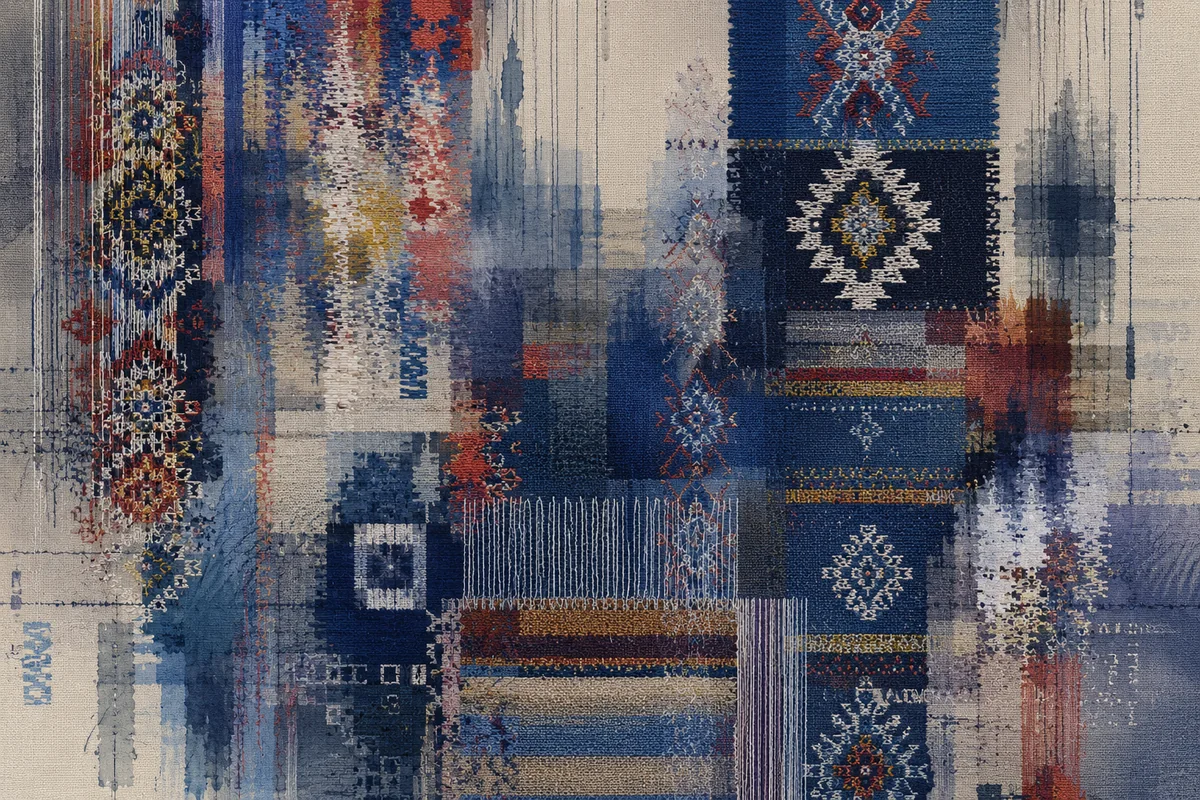
Yüzə yaxın fotoşəkil, eskiz və sənəd yarımşəffaf tekstil səthi üzərinə proyeksiya olunur. Təsvirlər hərəkət edir, titrəyir, bir-birinə qarışır və yenidən yox olur; bəzən uzaq işıq nöqtələri kimi görünür, bəzən bütöv təsvirlərə çevrilir, bəzən isə bir araya gələrək xalça səthlərini, qurama kompozisiyalarını və tekstil yaddaşını xatırladan daha böyük strukturlar yaradır.
Bu instalyasiya arxivi sənədləşdirilmiş keçmiş kimi deyil, daim hərəkətdə olan material kimi təqdim edir. Burada təsvirlər sap kimi davranır: onlar birləşdirilir, qatlanır, bərpa olunur, əlaqələndirilir və yenidən ayrılır. Bu proses vasitəsilə arxiv tekstilə bənzər ötürmə sisteminə çevrilir.
Əsər üç fərqli araşdırma istiqamətini bir araya gətirir: Elina Juopperinin irs və yaddaş üzərində qurulan Perintö layihəsini; Könül Rəfiyevanın qayğı, bərpa, kollektiv ötürmə və “forma almamış yaddaş” anlayışlarına əsaslanan Gurama metodologiyasını; eləcə də Timur Əmirxan tərəfindən inkişaf etdirilən rəqəmsal xalça, alqoritmik kompozisiya, hərəkətli təsvir və məkanla işləyən yeni media praktikasını.
Toxunmuş xatirələr sərgisi çərçivəsində təqdim olunan bu canlı protokol sərginin əsas sualını -“yaddaş necə formaya çevrilir?” -hərəkətli təsvir mühitində yenidən düşünür. Burada arxiv, tekstil və rəqəmsal media vahid bir məkan daxilində fəaliyyət göstərir.
Burada yaddaş sadəcə qorunmur. O, icra olunur, proyeksiya edilir və yenidən toxunur.
English
Woven Protocol is a collaborative new media installation by Konul Rafiyeva and Timur Amirkhan, developed through the Gurama methodology and based on Elina Juopperi’s fifteen-year archive from the Perintö project. It approaches textile as a pre-digital media structure and projection as its contemporary extension.
One hundred photographs, sketches and documents are projected onto a large translucent textile surface. They move, flicker, merge and dissolve: sometimes appearing as distant points of light, sometimes expanding into full frames, sometimes weaving together into larger formations that evoke carpets, patchwork and textile memory.
Rather than treating the archive as documentation, Woven Protocol transforms it into material in motion. The images behave like threads: assembled, layered, repaired and released. Through this process, the archive becomes a textile-like system of transmission.
The work brings together three distinct lines of research: Juopperi’s long-term investigation of inheritance, memory and the reactivation of textile traditions; Rafiyeva’s Gurama methodology, grounded in repair, care, collective transmission and memory before form; and Timur Amirkhan’s new media practice with digital carpets, algorithmic composition, soft sculpture, moving image and spatial installation.
Presented within Threads of Remembrance, Woven Protocol expands the exhibition’s central question - how does memory take form?- into a moving image environment where archive, textile and digital media operate as one shared field. Here, memory is not preserved. It is performed and re-woven.